
Mallorca — Spain
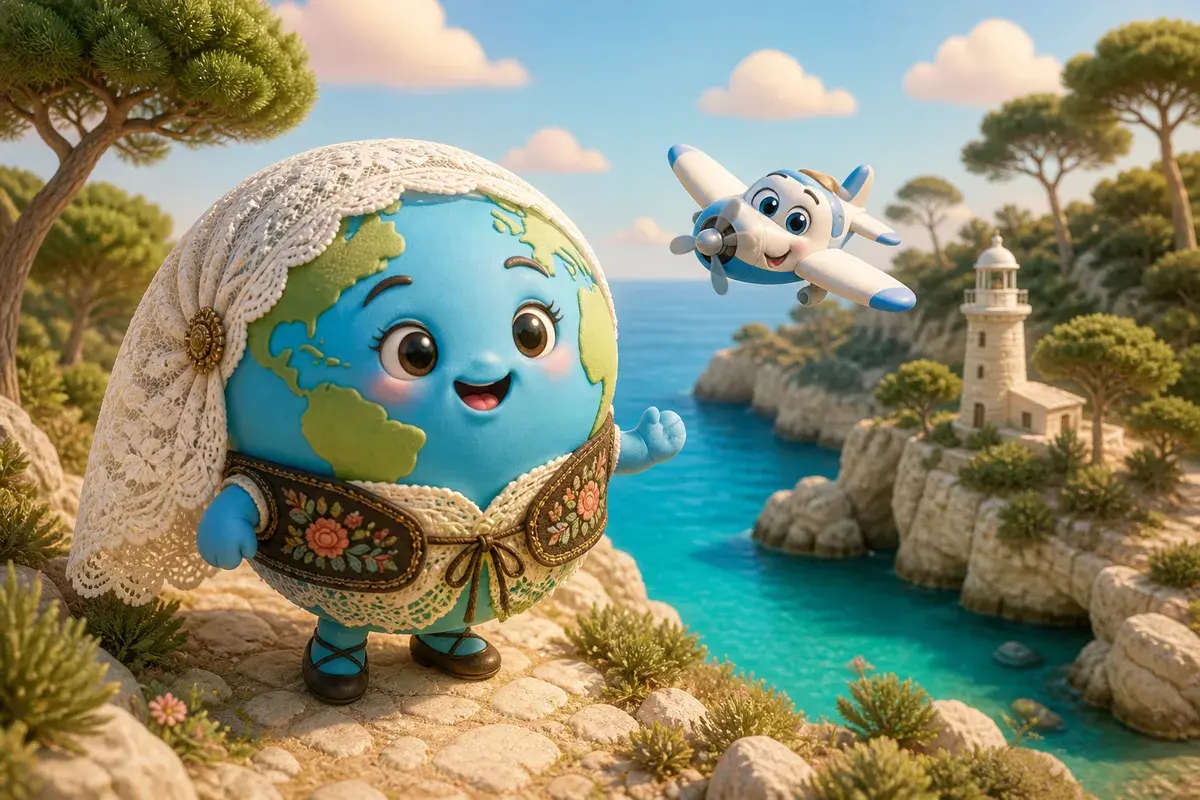
The largest of the Balearic islands runs from a limestone mountain range along its north-west shore to a flat, farmed interior and a south-east coast cut into dozens of small coves. Palma, its capital and port, holds a Gothic cathedral on the waterfront and an old town of courtyards behind it.
Free — no account needed. The assistant builds a full proposal: itinerary, honest budget, map and booking links.
Why go
Mallorca is really three holidays sharing an airport. There is the Tramuntana: a ridge of terraced olive groves, stone villages and hairpin roads that draws hikers in spring and professional cyclists in February. There is Palma, a small city with a genuine art scene, a market culture and a cathedral that would anchor a mainland capital. And there is the coast — long sandy bays in the north, a string of narrow rock-walled coves in the south-east, and the resort strips that gave the island its reputation. They barely overlap, and choosing badly is the classic mistake.
Renting a car and moving between those three islands-within-an-island is what makes the place work, as does a walking or cycling week that ends at a beach. Settle into one resort expecting to be carried around, and the island fights back: the bus network thins out fast, the best coves have small car parks that fill by mid-morning, and the mountain road is slow by design. Come for variety and mobility, not for a single fixed address.
Month-by-month climate
The island's winters are mild rather than cold: 16.7 °C by day and 9 °C at night in January, 17.2 °C in February, 18.4 °C in March. Spring warms steadily — 20.5 °C in April, 23.7 °C in May — and it is also the driest stretch before summer, with 32.7 mm in April and 31.1 mm in May. Then June reaches 28.3 °C, July 31.3 °C and August peaks at 31.5 °C with nights at 23.9 °C. September holds 28.6 °C, October 25.3 °C, November 20.5 °C.
The rain is concentrated at the far end of the year, which surprises people who book October for the warm sea. The heaviest rain of the year falls in November, 75.5 mm over 8 measured rain days, with October close behind at 70.1 mm over 6 — and each records 4 days above 5 mm, double what any other month manages. September already turns with 55.8 mm. July, by contrast, produced 2.2 mm and not a single rain day; August 15.3 mm. Annual total: 462.9 mm across 53 rain days. In practice, a beach week from June to early September is close to weatherproof, while an autumn trip needs a plan B and a car with decent tyres for the mountain road.
| Month | Avg. high (°C) | Avg. low (°C) | Rainfall (mm) | Days ≥ 1 mm | Days ≥ 5 mm |
|---|---|---|---|---|---|
| Jan | 16.7 | 9.0 | 45 | 6 | 2 |
| Feb | 17.2 | 9.3 | 38 | 5 | 2 |
| Mar | 18.4 | 10.8 | 40 | 6 | 2 |
| Apr | 20.5 | 12.8 | 33 | 5 | 2 |
| May | 23.7 | 16.1 | 31 | 3 | 2 |
| Jun | 28.3 | 20.7 | 14 | 2 | 1 |
| Jul | 31.3 | 23.8 | 2 | 0 | 0 |
| Aug | 31.5 | 23.9 | 15 | 1 | 1 |
| Sept | 28.6 | 21.1 | 56 | 5 | 2 |
| Oct | 25.3 | 17.6 | 70 | 6 | 4 |
| Nov | 20.5 | 13.3 | 76 | 8 | 4 |
| Dec | 18.2 | 10.6 | 44 | 6 | 2 |
Source: Meteostat — Majorque et les Baleares (Spain) station, 0.0 km away, 10 sample years. Monthly totals rebuilt from daily averages.
When to go
Late April to mid-June is the best window overall: 20.5 to 28.3 °C, dry, the Tramuntana green and walkable, the coves still empty. September is the swimmers' month — 28.6 °C air and a sea at its warmest after a long summer — with rain starting to return. October stays pleasant at 25.3 °C but brings 70.1 mm. August is hottest, busiest and the hardest to park.
The most favourable months, on these records
- April
- May
- June
- September
- October
- November
What to see in 2, 4 and 7 days
In 2 days
- Morning one: Palma's cathedral and the old town's courtyards, then the covered market for lunch.
- Afternoon one: the hilltop castle above the city, circular and unusual, for the bay from above.
- Morning two: a cove east of the capital, arriving before the car park fills.
- Afternoon two: the seafront promenade and the arcaded streets, ending on a rooftop over the port.
In 4 days
- Add the mountain road north: the monastery village, the writers' village, and the terraced groves between them.
- Add the port town at the end of the valley, reached by the historic wooden train and its tram.
- Add the northern peninsula: a lighthouse cape, a wide bay and a marsh reserve full of birds.
- Add one deliberately empty afternoon on a long sandy beach rather than a cove.
In 7 days
- Add two days in the south-east, working through the string of narrow coves one at a time.
- Add a Tramuntana walk on the old pilgrims' path, with the sea on one side the whole way.
- Add the limestone caves inland, and a market morning in a farming town on its market day.
- Add a boat afternoon to reach the coves that have no road at all.
- Add a day on a hired bike on the flat interior lanes, which is why the island fills with cyclists in spring.
- Add a slow return through the wine villages of the centre before flying home.
Getting there and around
Palma (PMI) is the island's single airport and sits at our reference point for Mallorca, which is why the distance reads 0 km: everything on the island is measured from here. A frequent bus and a metro line connect it to the capital in minutes, and resort transfers run on arrivals. The next two airports, Menorca (MAH) at 132 km and Ibiza (IBZ) at 139 km, sit on other islands — a reminder that a missed connection here is a ferry problem, not a drive. Renting a car at the airport is the normal choice; buses serve the main towns but not most coves.
Nearest airports
- PMIPalma de Mallorca Airport0 km from the centre
- MAHMenorca Airport132 km from the centre
- IBZIbiza Airport139 km from the centre
Budget
Country price level compared with France : −24 %
Price index for restaurants and hotels, France = 1000, from European purchasing power parities. It is a country average: it says nothing about one hotel in particular.
Mallorca in August and Mallorca in May are, financially, two different destinations. Spain is cheaper than France, but the island in high season behaves like a market of its own and can run above mainland prices. High summer puts a comfortable double at 90 to 180 € a night, and May or October at about half that. Food runs around 25 to 50 € a day per person, less if you shop at the covered markets. Add a car — the single biggest variable, and the item that sells out first in July and August.
Common mistakes
- Booking August without reserving a car at the same time: island rental fleets sell out, and prices rise steeply once they do.
- Choosing a resort on the strength of a photographed cove, then finding it is an hour of mountain hairpins away.
- Arriving at a famous cove after ten in the morning, when the small car park is full and the access road closed.
- Booking November for a beach week: 75.5 mm over 8 rain days is our wettest month of the year here.
- Staying in Palma expecting to swim off the city — the good water starts well outside the bay.
Frequently asked questions
Do you really need a car in Mallorca?
For anything beyond Palma and one resort, yes. Buses link the main towns reasonably well but stop short of most coves, mountain villages and trailheads, and the last service back is often earlier than you expect. If you would rather not drive the Tramuntana hairpins, base yourself in Palma, use the historic train and take organised boat trips instead.
When is the sea warm enough to swim?
From June onward the water is comfortable, and it stays that way later than the air suggests. September is often the best compromise, with 28.6 °C by day and a sea that has been heating all summer. May, at 23.7 °C air, is pleasant on land but the water is still bracing. By November, at 20.5 °C and 75.5 mm of rain, swimming becomes a matter of conviction.
Is Mallorca only party resorts?
No, though two well-known strips deserve their reputation and are easy to avoid by looking at a map before booking. The mountain north-west, the farming interior and the south-east coves are a different island entirely — quiet villages, terraced hillsides, small harbours. The island has more hiking and cycling visitors than clubbers for most of the year.
Updated on 21 September 2026