
Slovenia — where to go and when
1 destination covered
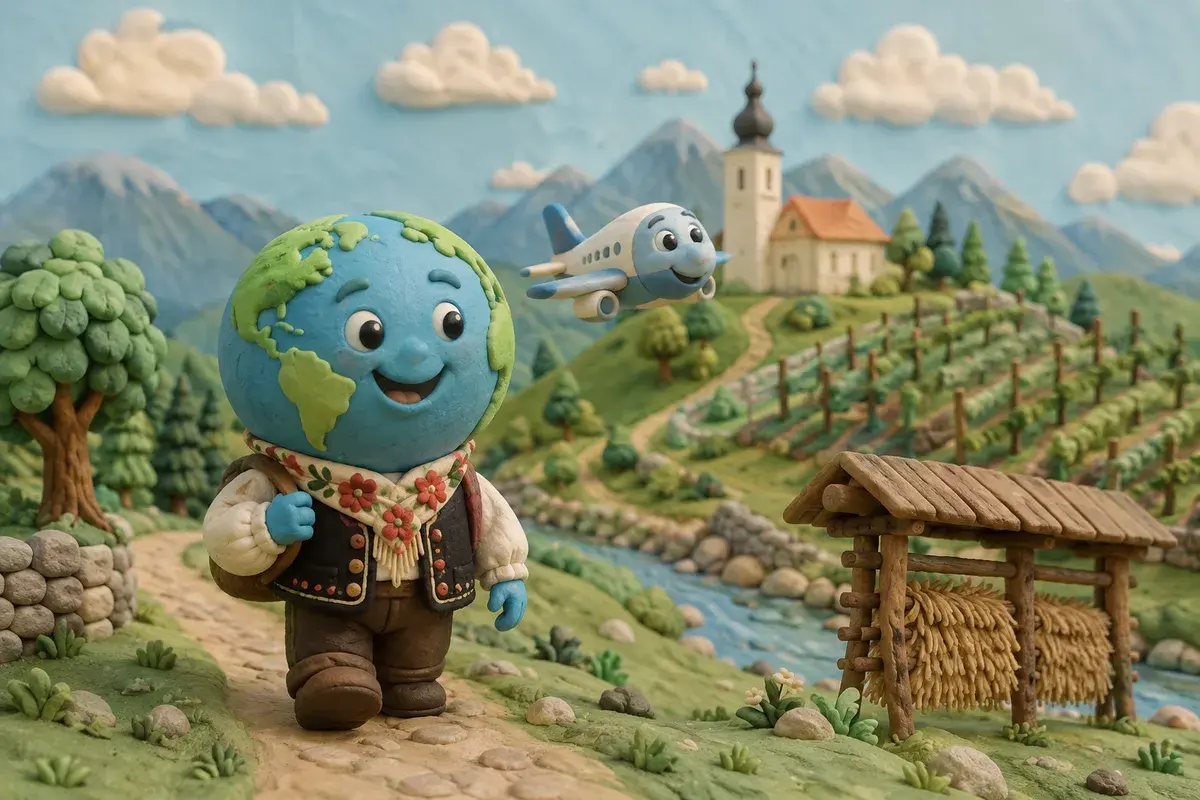
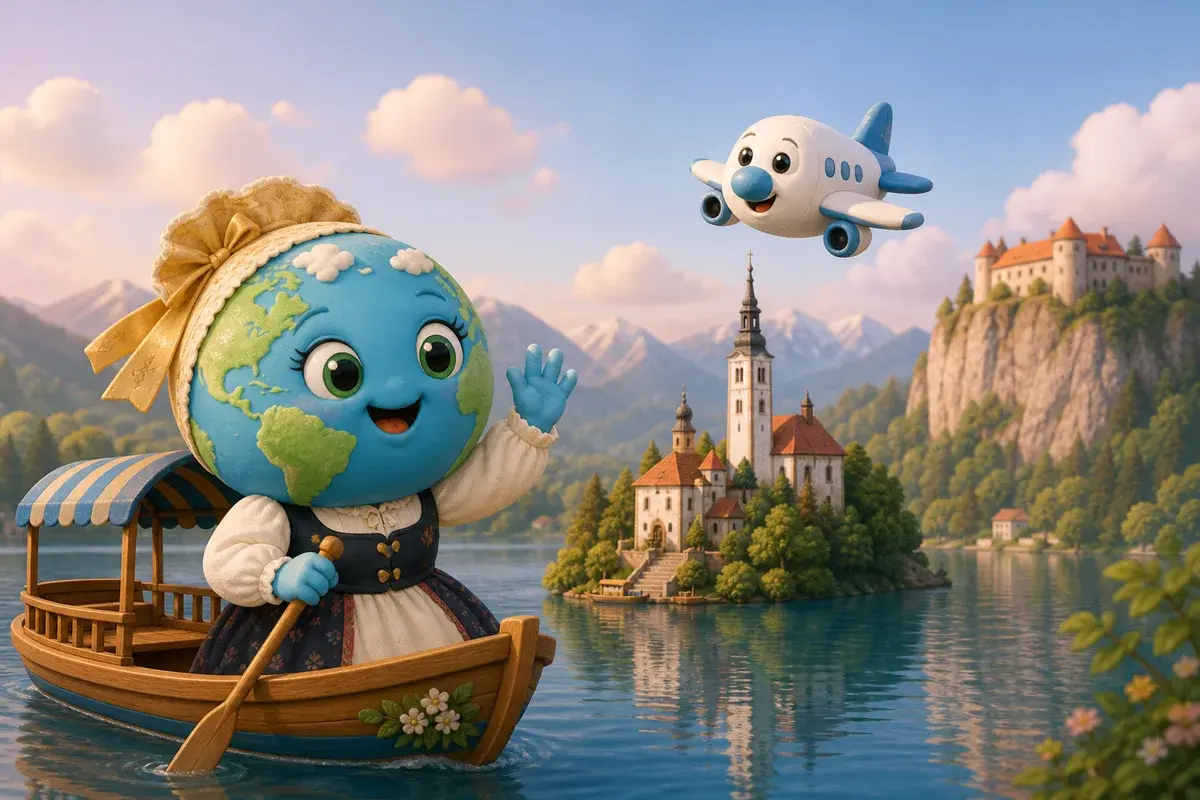
Slovenia enters this site through Bled, an alpine lake with an island church in the middle of it and a castle on the cliff above, which is the sort of arrangement that looks invented and is not. Behind it rise the Julian Alps and a national park; in front, a country small enough to cross in three hours, with a compact capital, karst caves and a short Adriatic coastline. The country prices out near a fifth cheaper than France in our figures, which is the quiet reason it works so well for walking holidays: a week here costs less than the equivalent week in Austria or Switzerland for very similar mountains. Slovenia suits travellers who want outdoor days without technical difficulty or specialist kit, who do not need nightlife, and who understand that the lake is beautiful and busy at the same time, particularly along its eastern shore in the middle of the day.
When to go
No month is flagged as comfortable in our data, and the figures show why: the warmest reaches just 18.2 °C by day, the coldest 0.7 °C with -5.2 °C at night, and rain falls on 162 days a year for a substantial 1999.9 mm. This is mountain weather, and it rewards flexibility rather than planning. Summer gives the warmest water and the open high trails; late spring and early autumn give quieter paths, and winter turns the lake into a different, colder proposition entirely.
No single month clears our comfort threshold everywhere in the country at once. The table below gives each place its own favourable months instead.
The places we cover, side by side
| Place | Favourable months | Warmest month, avg. high (°C) | Coldest month, avg. high (°C) | Rainy days a year (≥ 1 mm) |
|---|---|---|---|---|
| Bled | none | 18.2 | 0.7 | 162 |
Figures measured at the weather station nearest each place, then averaged over the warmest and the coldest months of the year — not over a fixed calendar season. Each destination page carries its own month-by-month table, its station and its sample size.
Getting around
Buses handle almost everything: frequent services link the capital to the lake in around an hour and a quarter, and continue into the mountain valleys beyond. A railway passes nearby, but the station sits some way from the lakeshore, so buses are usually simpler. Around the lake itself people walk or cycle the shoreline circuit, and rowing boats cross to the island. The nearest airport is 30 km away, with a second across the border at 35 km.
Budget
Country price level compared with France : −18 %
Price index for restaurants and hotels, France = 1000, from European purchasing power parities. It is a country average: it says nothing about one hotel in particular.
Destinations in Slovenia
Frequently asked questions
Is Bled too crowded to enjoy?
It is busy on the eastern shore between mid-morning and late afternoon, and almost empty everywhere else. Walk the far side of the circuit, climb one of the two viewpoints above the water, or come out before breakfast. Staying overnight changes the experience completely, since most of the pressure comes from day visitors arriving by coach.
Do I need a car in Slovenia?
Not for the lake and the capital, which buses connect well. A car helps for the national park valleys, the mountain pass roads and the caves, where services thin out and timetables become the constraint. Distances are short throughout, so even with a vehicle you will rarely drive more than two hours in a day.
Updated on 21 September 2026