
Tunisia — where to go and when
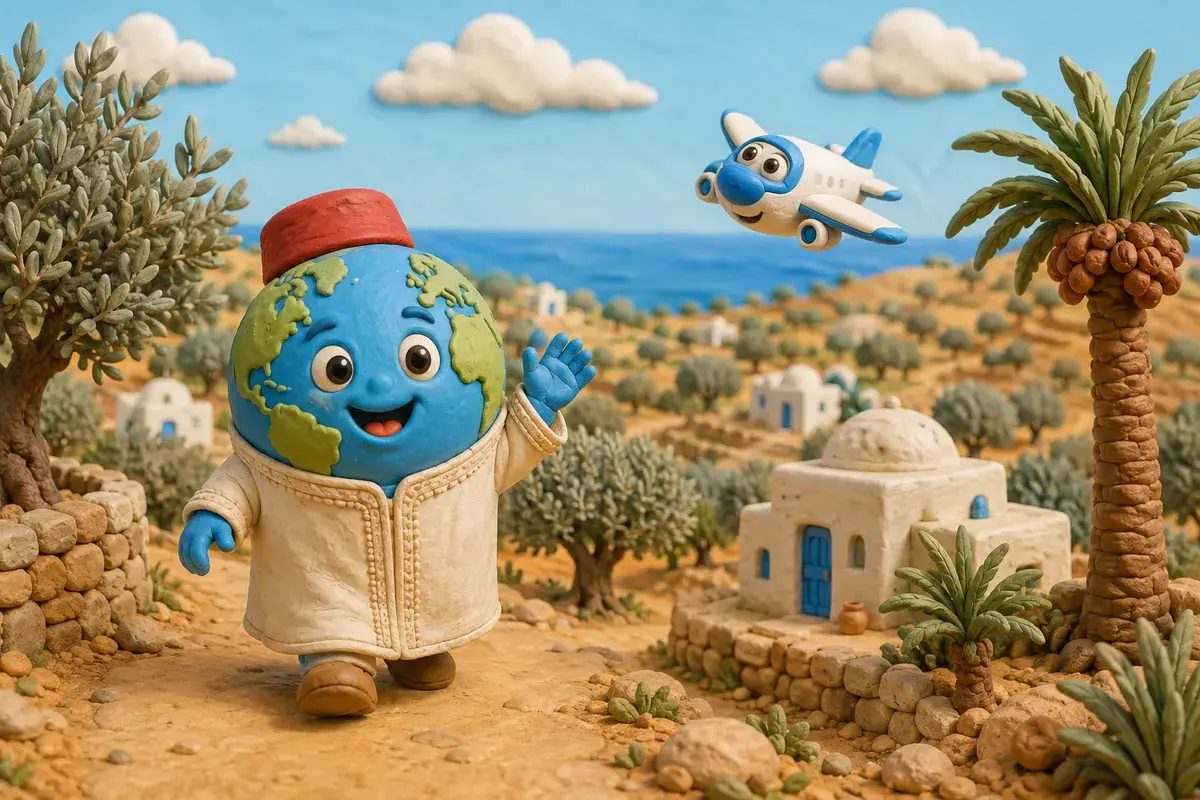
3 destinations covered
Djerba is a flat, low island off the southern Tunisian coast, joined to the mainland by a Roman-era causeway, and it makes a very different case from the rest of North Africa. Olive groves and palm gardens cover the interior, whitewashed domed mosques stand at village crossroads, and one of the oldest Jewish communities in the region has been present here for well over a thousand years. The beaches are long and shallow, which is why package tourism found it early. The cost gap with France is very wide in our data, on the order of four-fifths, so a week here is one of the cheapest ways to reach genuinely warm sea from Europe. Tunisia suits travellers who want winter sun without a long flight, who will rent a bicycle or a car to see the villages, and who understand that the island and the resorts are not the same place.
When to go
March to May and October to November are the months the figures support, sitting either side of a summer that climbs to 35.1 °C by day. Winter is the quiet surprise: the coolest month still reaches 17.5 °C in daytime, which makes the island a plausible off-season escape even if the sea is too cold for swimming. Rainfall is minimal, 169.6 mm spread across 29 rainy days a year, and almost none of it falls between spring and autumn.
The places we cover, side by side
| Place | Favourable months | Warmest month, avg. high (°C) | Coldest month, avg. high (°C) | Rainy days a year (≥ 1 mm) |
|---|---|---|---|---|
| Djerba | March, April, May, October, November | 35.1 | 17.5 | 29 |
| Sidi Bou Said | March, April, May, October, November | 35.4 | 17.1 | 58 |
| Tunis | March, April, May, October, November | 35.4 | 17.1 | 58 |
Figures measured at the weather station nearest each place, then averaged over the warmest and the coldest months of the year — not over a fixed calendar season. Each destination page carries its own month-by-month table, its station and its sample size.
Getting around
The island is small enough to cross by bicycle, and a rented bike or scooter is the usual way to reach the villages and the inland markets. Shared long-distance taxis and coaches run from the causeway towards the mainland cities, leaving when full rather than to a timetable, and a short ferry crosses from the island's western tip. The airport lies 21 km from the main town, with the nearest mainland airports 105 km and 218 km away.
Budget
Country price level compared with France : −79 %
Price index for restaurants and hotels, France = 1000, from European purchasing power parities. It is a country average: it says nothing about one hotel in particular.
Destinations in Tunisia
 DjerbaA flat, low island in the Gulf of Gabès, off southern Tunisia, joined to the mainland by an ancient causeway and a ferry. Our readings give it 169.6…
 Sidi Bou SaidSidi Bou Said is a clifftop village of whitewash and cobalt blue at the end of the suburban line north of the Tunisian capital, next door to the…
 TunisTunis lies between a shallow lagoon and a ring of dry hills: a walled medina at the core, a broad colonial avenue running down towards the water, and…
Frequently asked questions
Is there more to Djerba than the beach?
Considerably more, though you have to leave the hotel strip to find it. The island holds a historic synagogue, a restored fortress on the coast, weekly village markets, hundreds of small domed mosques and a pottery-making tradition in the south. A day on a bicycle covers several of them, and the interior is flat enough to make that easy.
When is the sea warm enough to swim?
From late spring through to autumn, which is wider than the comfortable sightseeing window. Summer daytime highs of 35.1 °C make the middle of the day a matter for shade rather than sand, so the practical pattern is swimming early and late. In winter the air stays pleasant at 17.5 °C but the water does not.
Updated on 21 September 2026